
To deepen cultural and people-to-people exchanges between China and Romania and promote mutual learning among civilizations, the Mastery of Yan and Zhao Acrobatics: Hebei Acrobatic Culture Photo Exhibition opened at the China Cultural Center in Bucharest on Aug. 6, 2026. The exhibition was supported by the China Cultural Relics Exchange Center and the China Cultural Center in Bucharest, and co-organized by the Hebei Art Center (Hebei Center for International Cultural Exchange) and Cangzhou Museum.
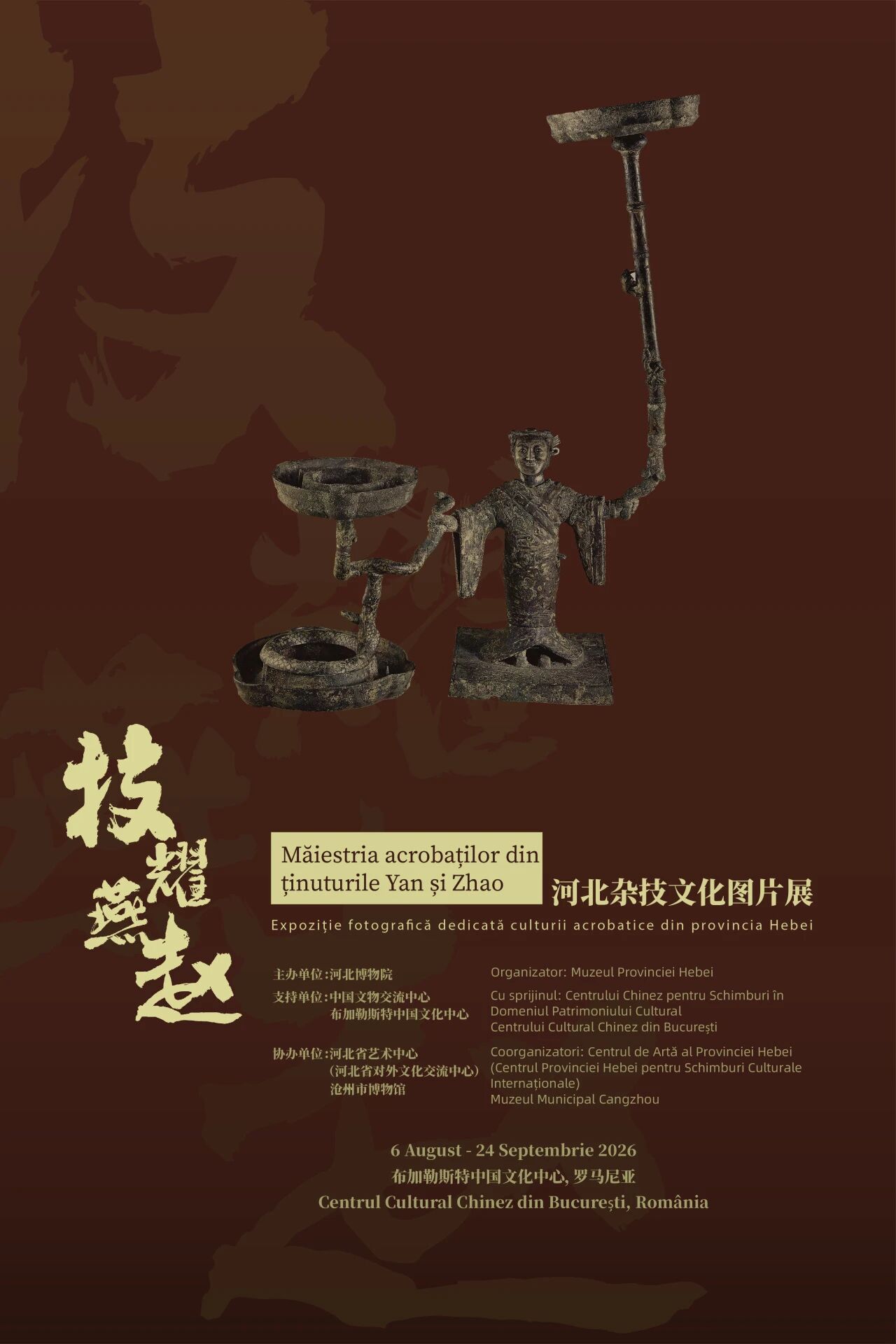
↑ Exhibition poster
Hebei is a major center of acrobatics in China. Wuqiao County in southeastern Hebei is one of the birthplaces of Chinese acrobatic art and is renowned as the "home of acrobatics." In 2006, Wuqiao acrobatics was included in the first batch of China's national-level intangible cultural heritage list, becoming a distinctive cultural calling card of China. By presenting the diverse forms of acrobatics represented by Wuqiao acrobatics and tracing their inheritance and development, the exhibition reflects the resilience, agility and optimism of the Chinese nation.
The exhibition is divided into two parts. The first, "Extraordinary Skills," uses images of cultural relics to present various acrobatic forms, including body-balancing skills, juggling, animal acts and circus performances, and illusionary magic, highlighting the remarkable skills of ancient Chinese acrobats. The relics shown are diverse in form: some feature vivid and distinctive shapes, such as a Warring States Period bronze lamp with a silver-headed human figure and a Han Dynasty painted pottery wine vessel featuring three acrobats performing handstands; some have lifelike decorative motifs, such as murals from the Xiaomachang ancient tomb in Wuqiao dating to the Eastern Wei Dynasty and a Song Dynasty Cizhou kiln white-glazed pillow with a black-painted design of a boy playing with a ball; and others demonstrate ingenious craftsmanship, such as a Warring States Period fifteen-lamp bronze candelabrum. Together they vividly convey the distinctive appeal of different forms of acrobatic art.
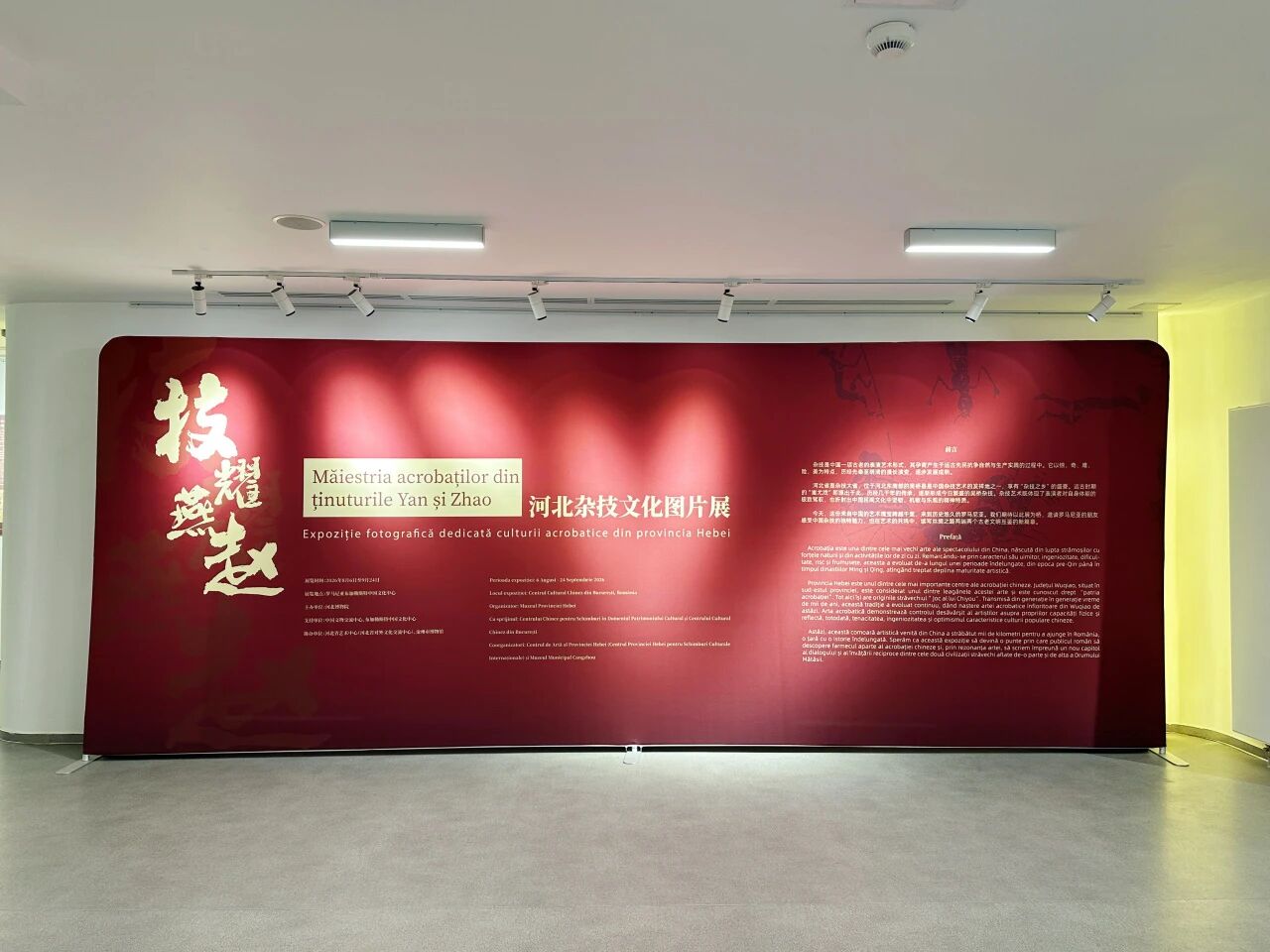
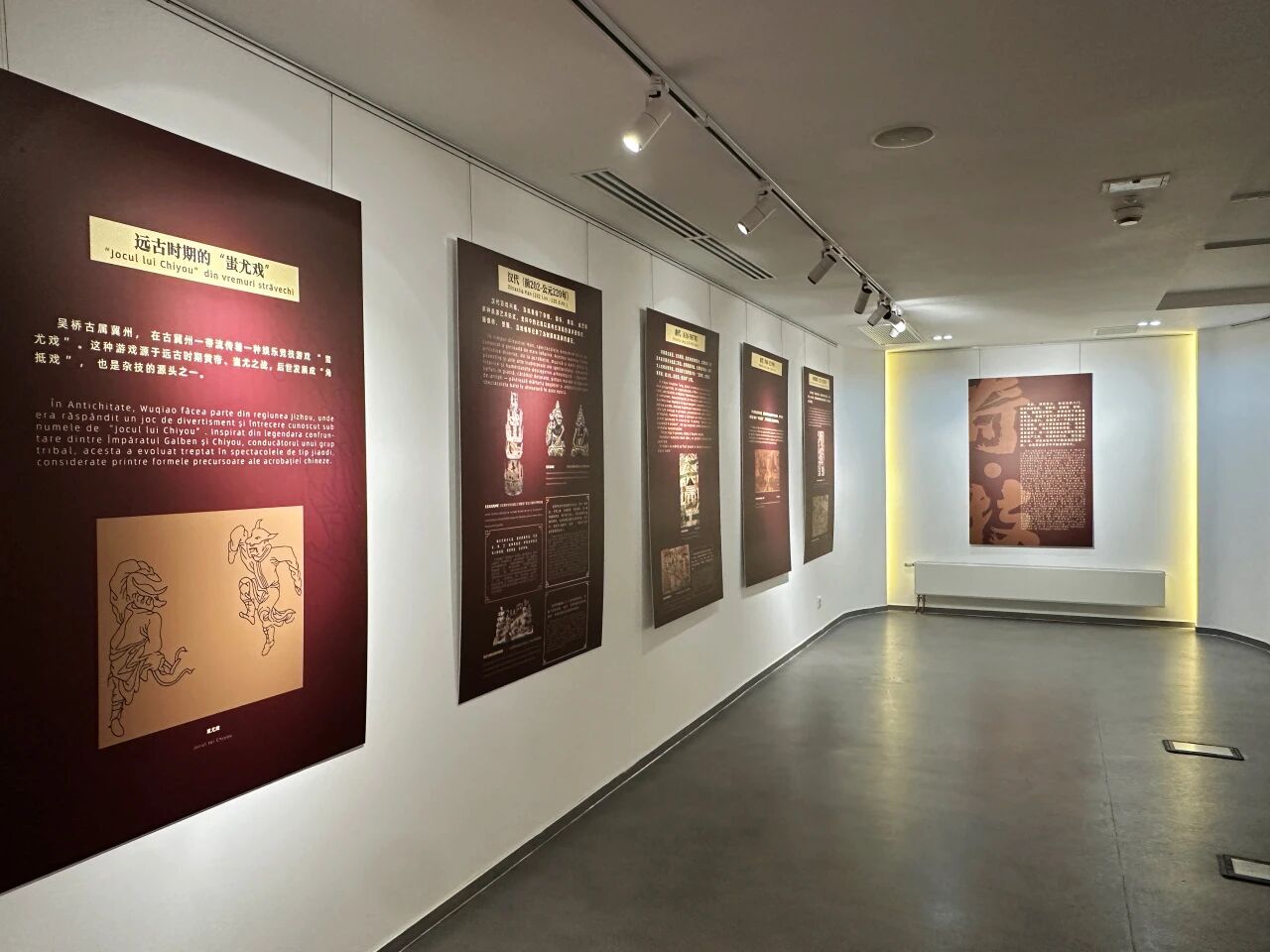
↑ Exhibition hall
Selected cultural relics featured in the exhibition
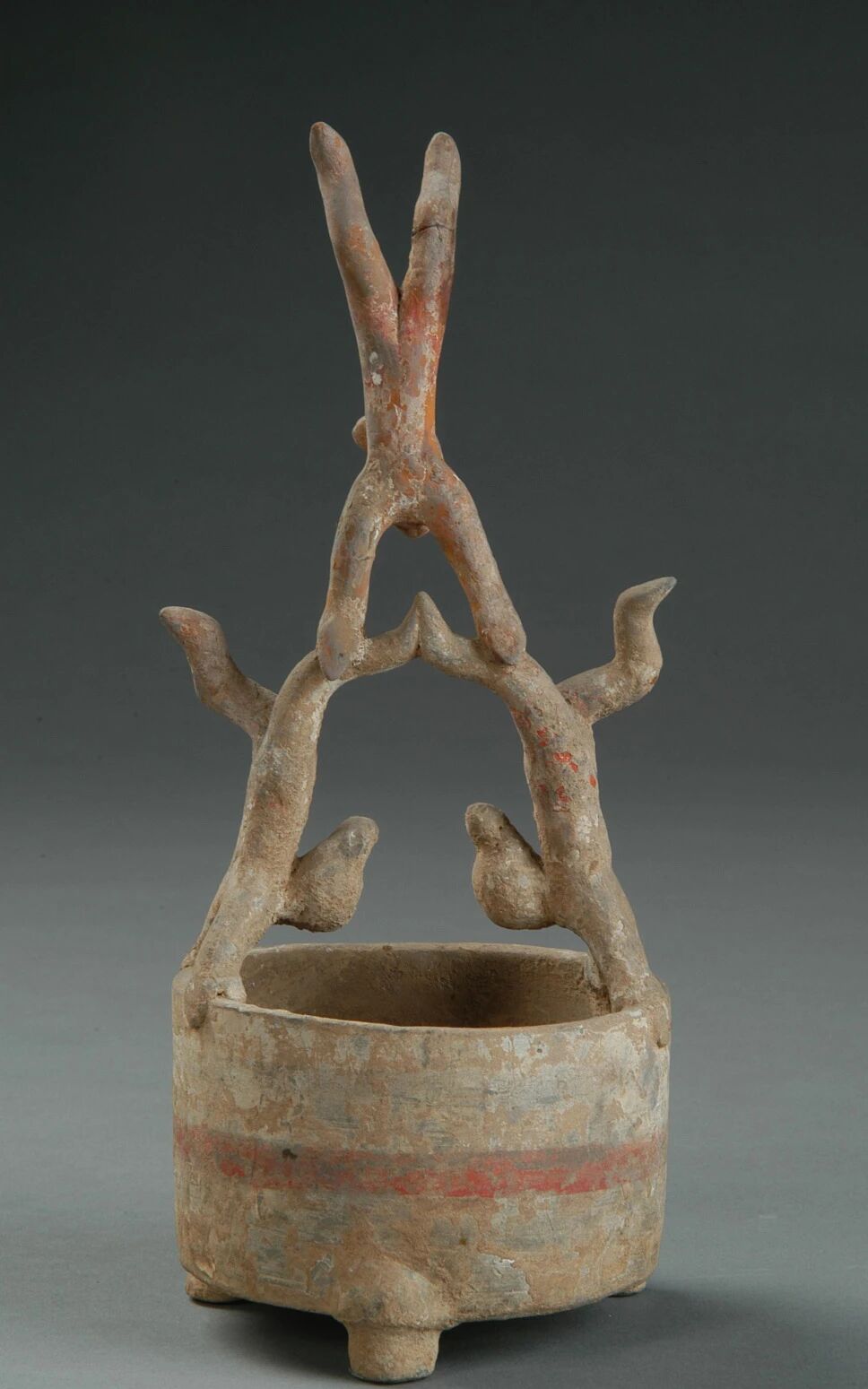
↑ Han Dynasty painted pottery wine vessel featuring three acrobats performing handstands -- Collection of Luoyang Museum
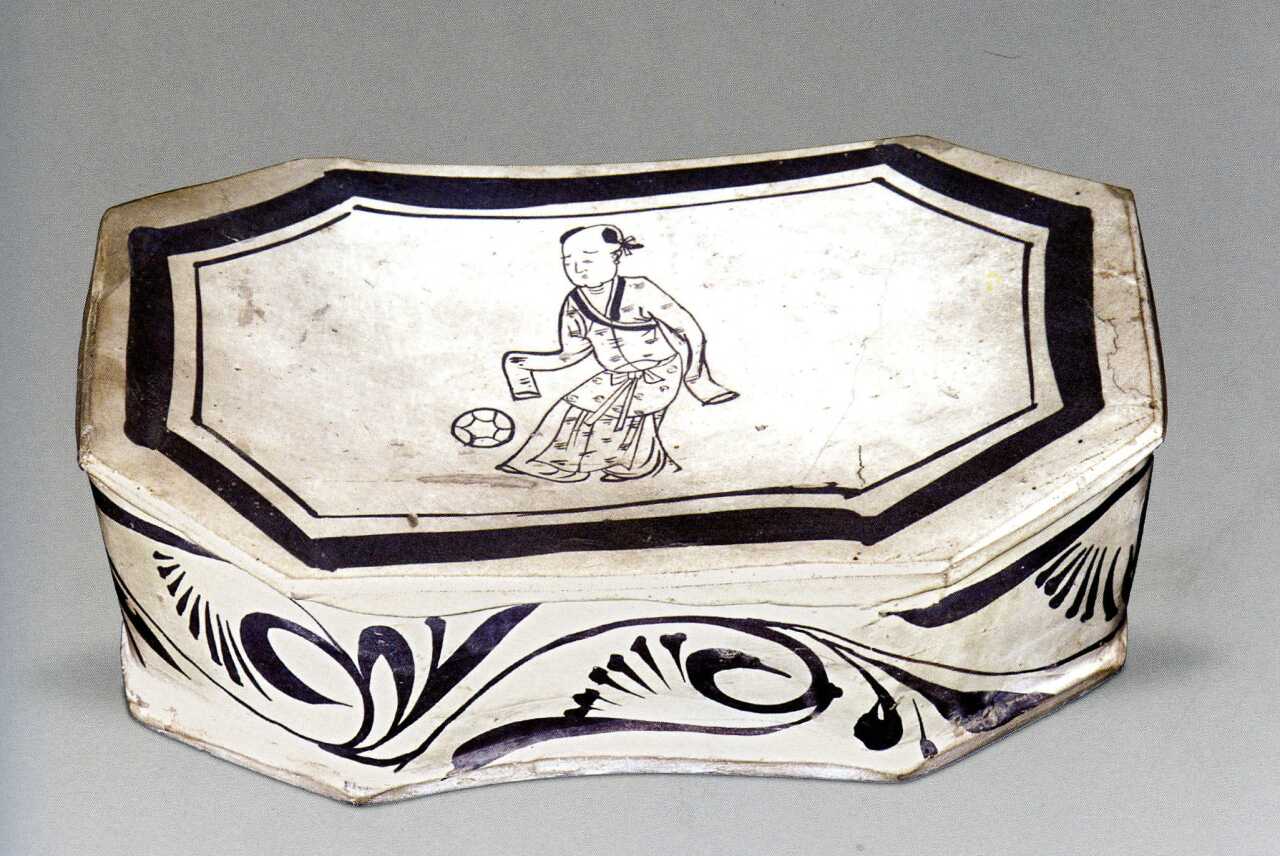
↑ Song Dynasty Cizhou kiln white-glazed pillow with a black-painted design of a boy playing with a ball -- Collection of Hebei Museum
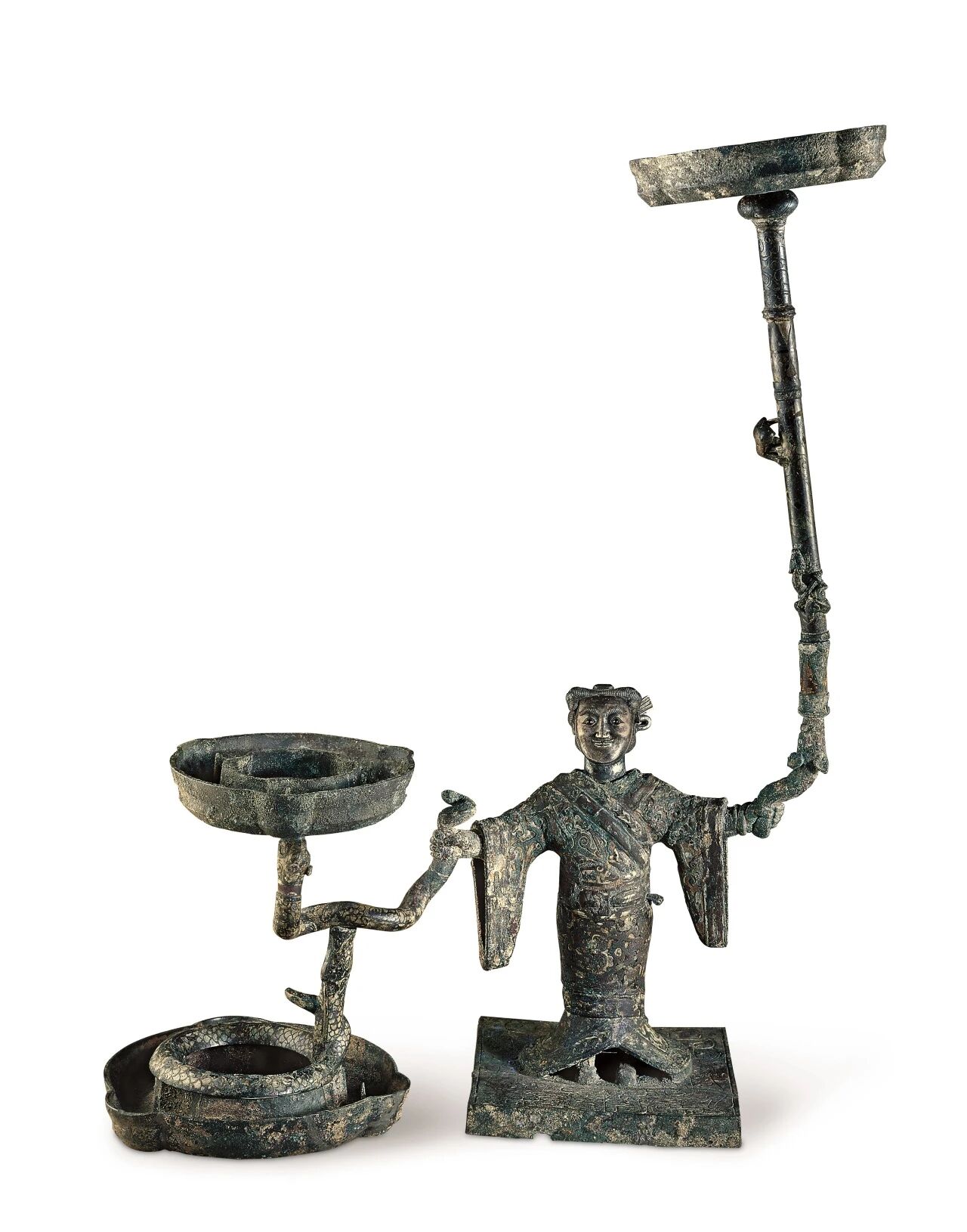
↑ Warring States Period bronze lamp with a silver-headed human figure -- Collection of Hebei Provincial Institute of Cultural Relics and Archaeology
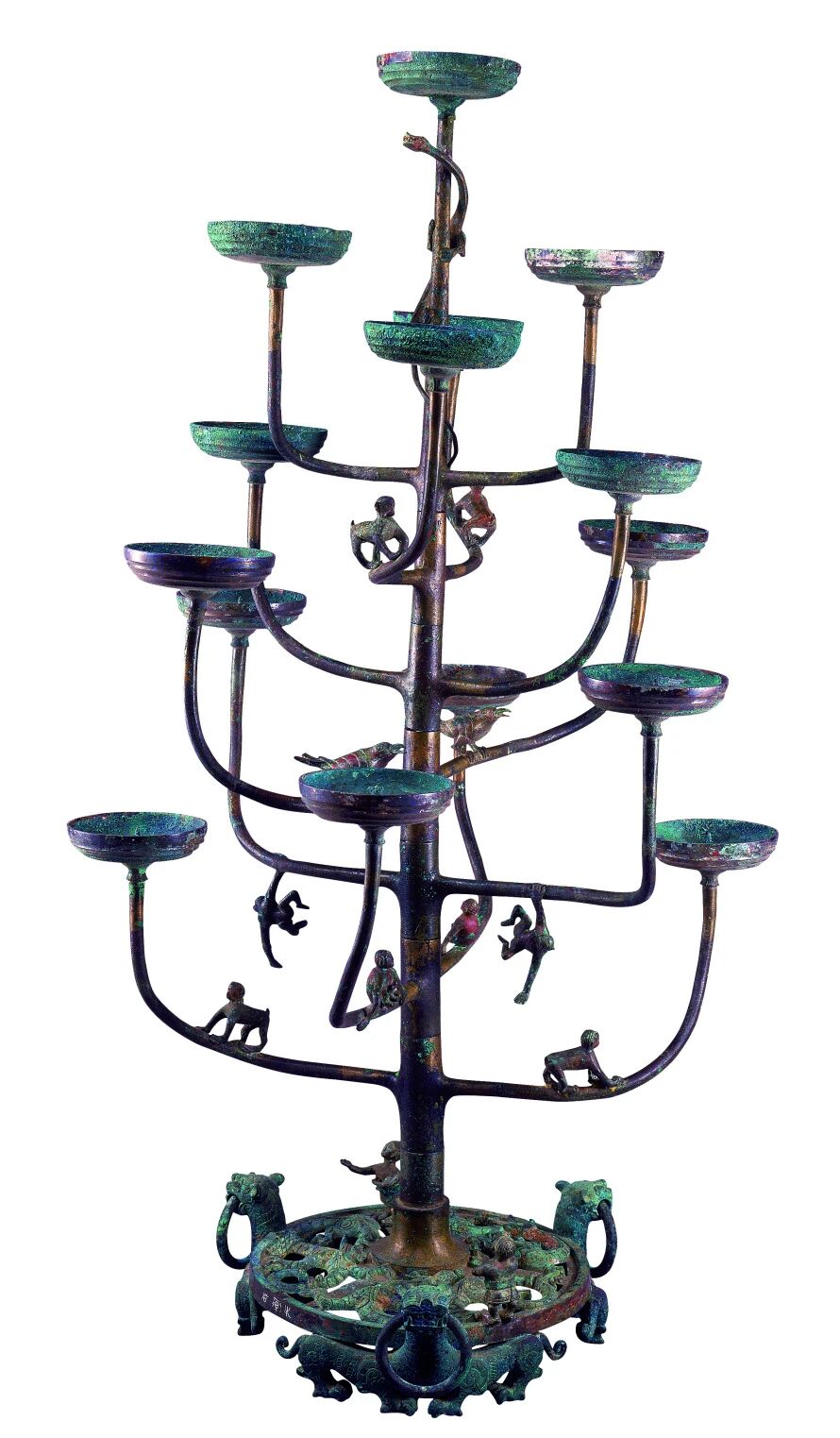
↑ Warring States Period fifteen-lamp bronze candelabrum -- Collection of Hebei Provincial Institute of Cultural Relics and Archaeology
The second part, "Inheritance and Continuation," uses posters, historical and news photographs, and videos to trace how Wuqiao acrobatics has explored new paths of inheritance and found renewed vitality since the late Qing Dynasty, while also showcasing achievements in acrobatic exchanges between China and Romania since the founding of the People's Republic of China.
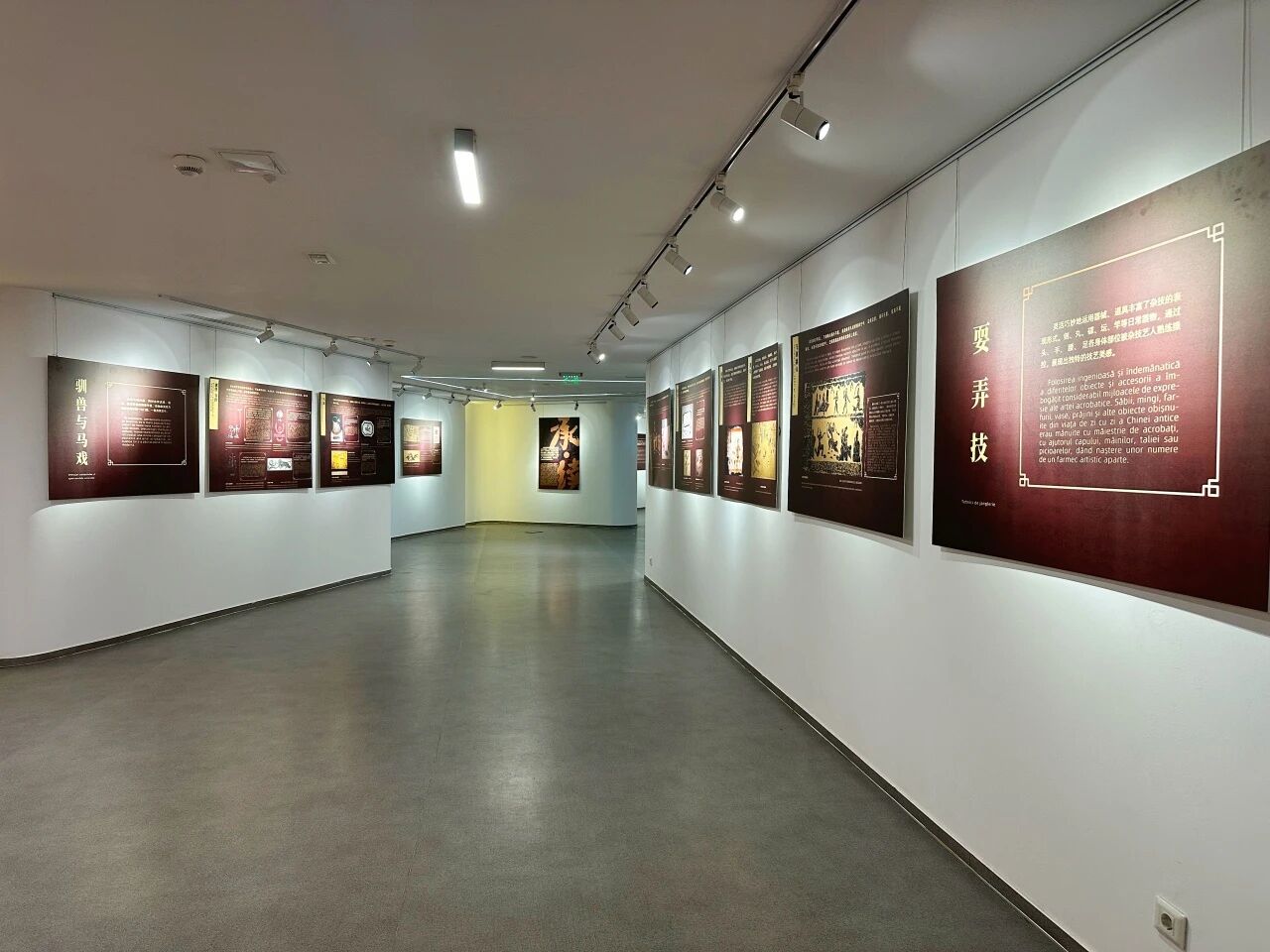
↑ Exhibition hall
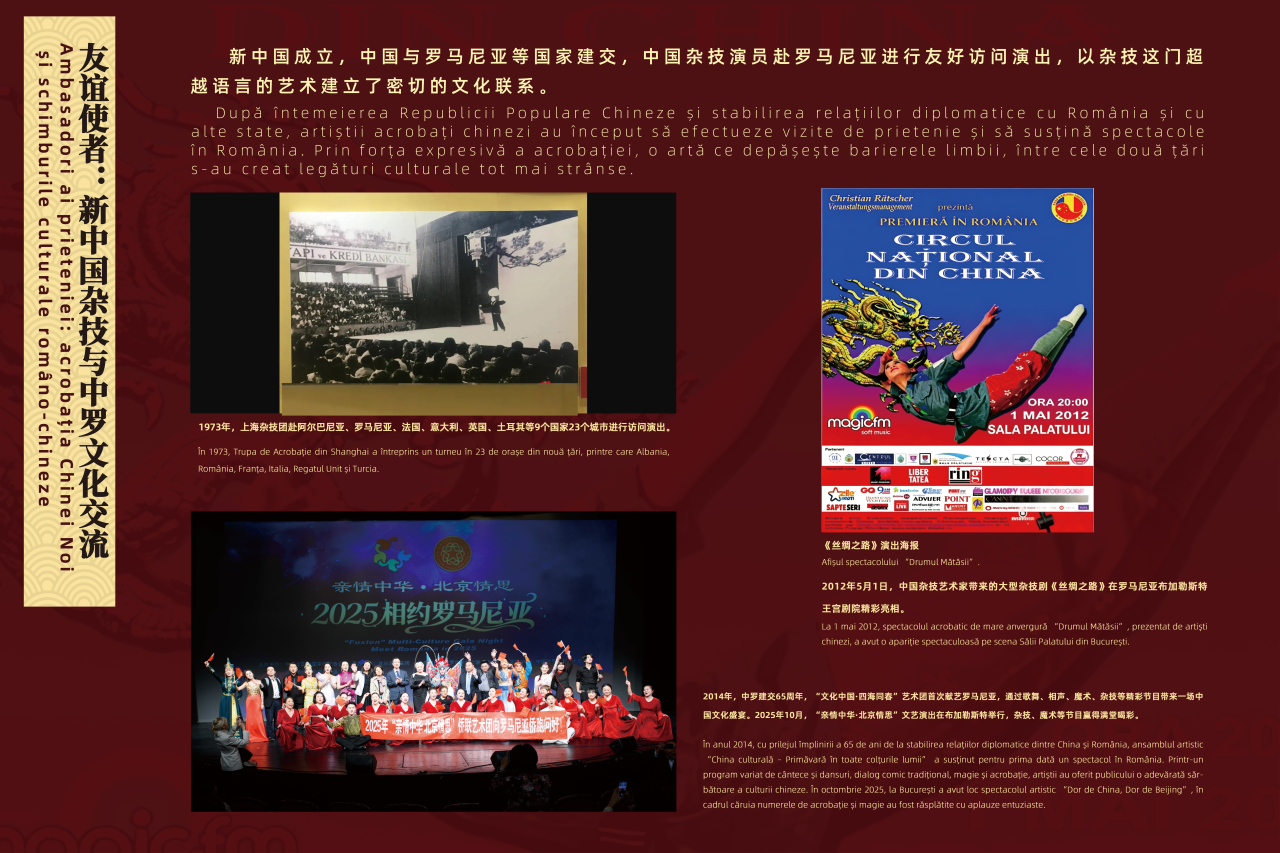
↑ Exhibition panel
Romania, like China, has a long tradition of acrobatics. With acrobatic art serving as a bridge, the exhibition aims to encourage the two countries to write a new chapter of exchanges and mutual learning among civilizations as they jointly advance the Belt and Road Initiative. The exhibition will run through Sept. 24, 2026.
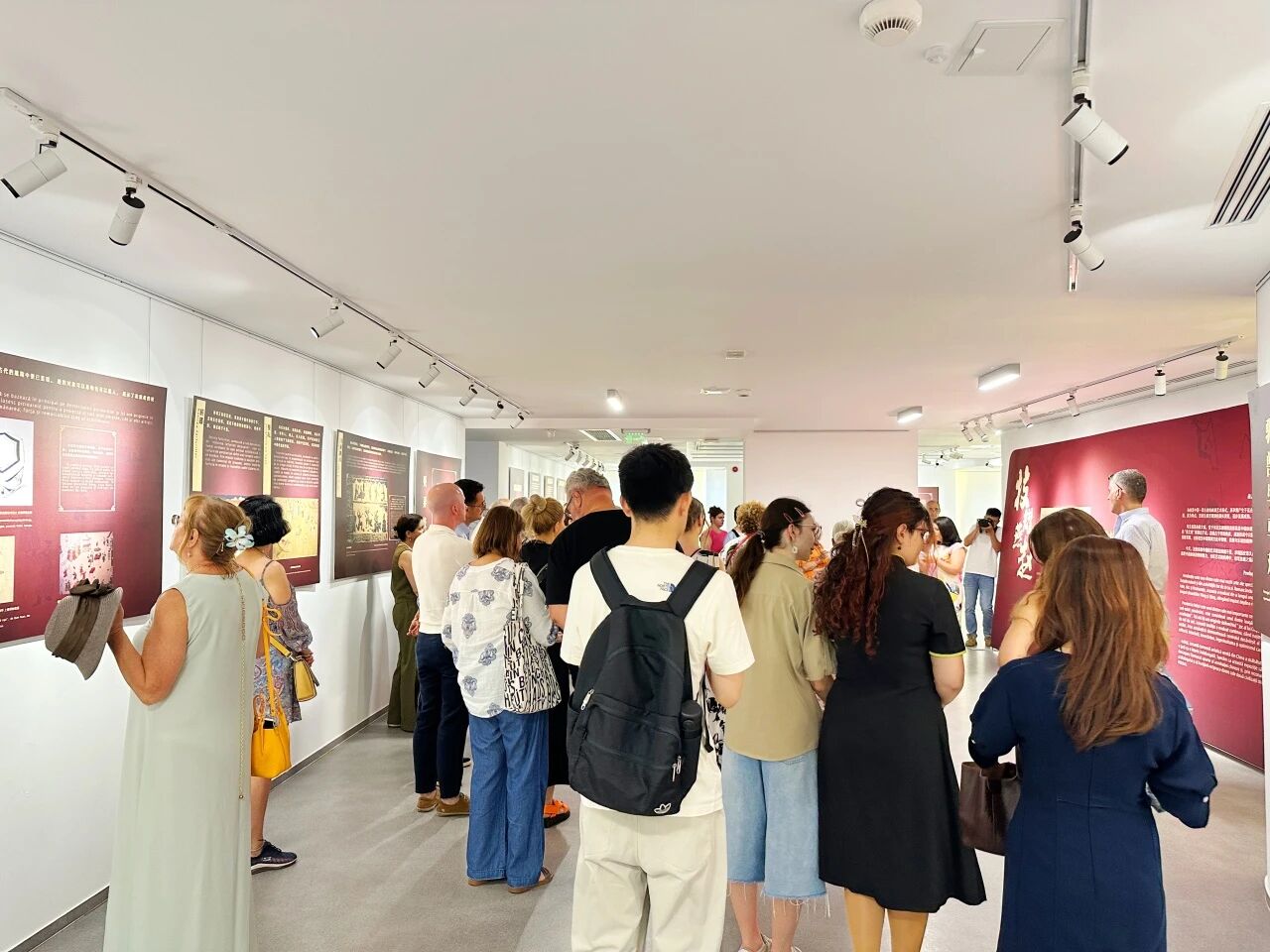
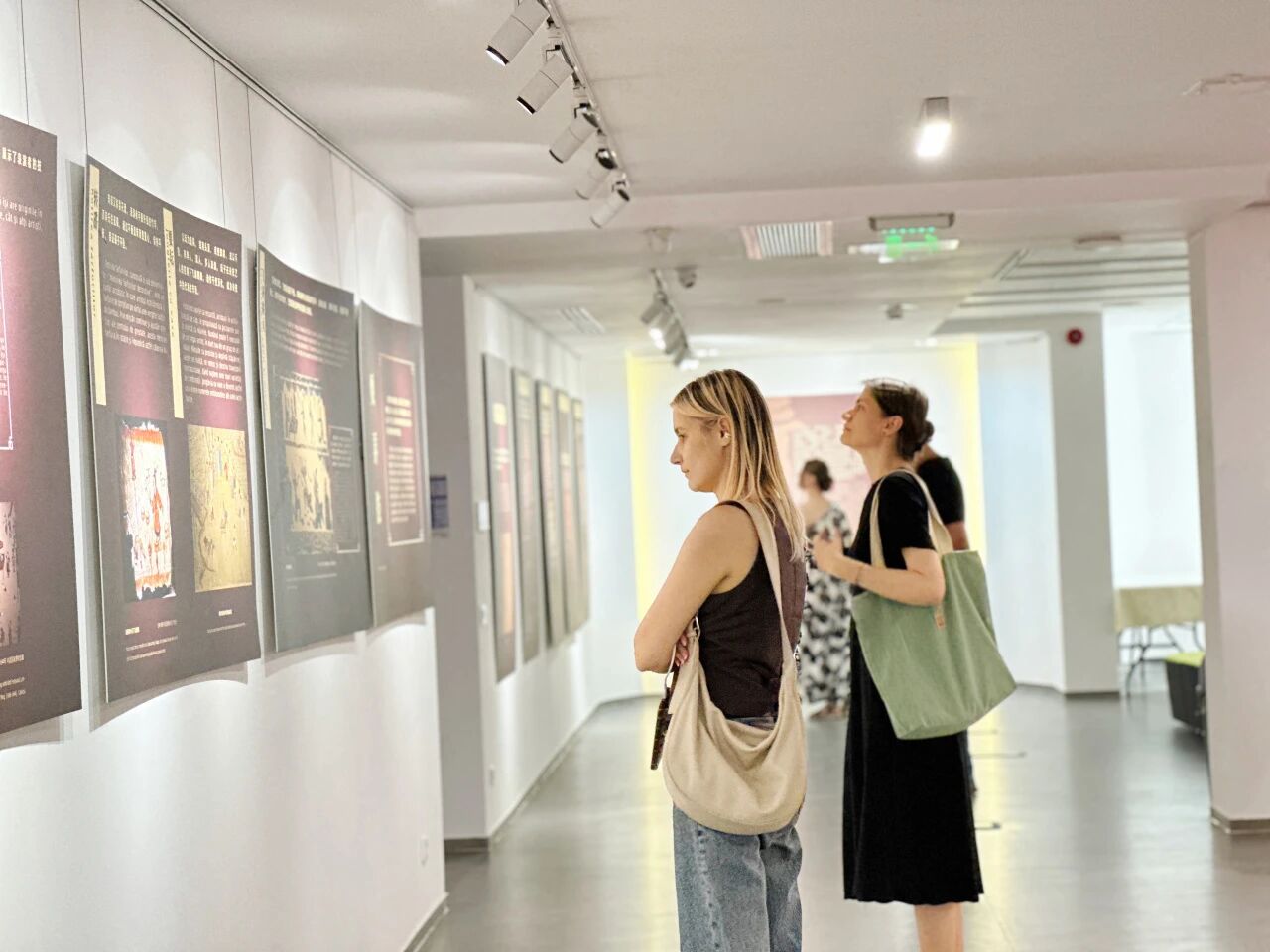
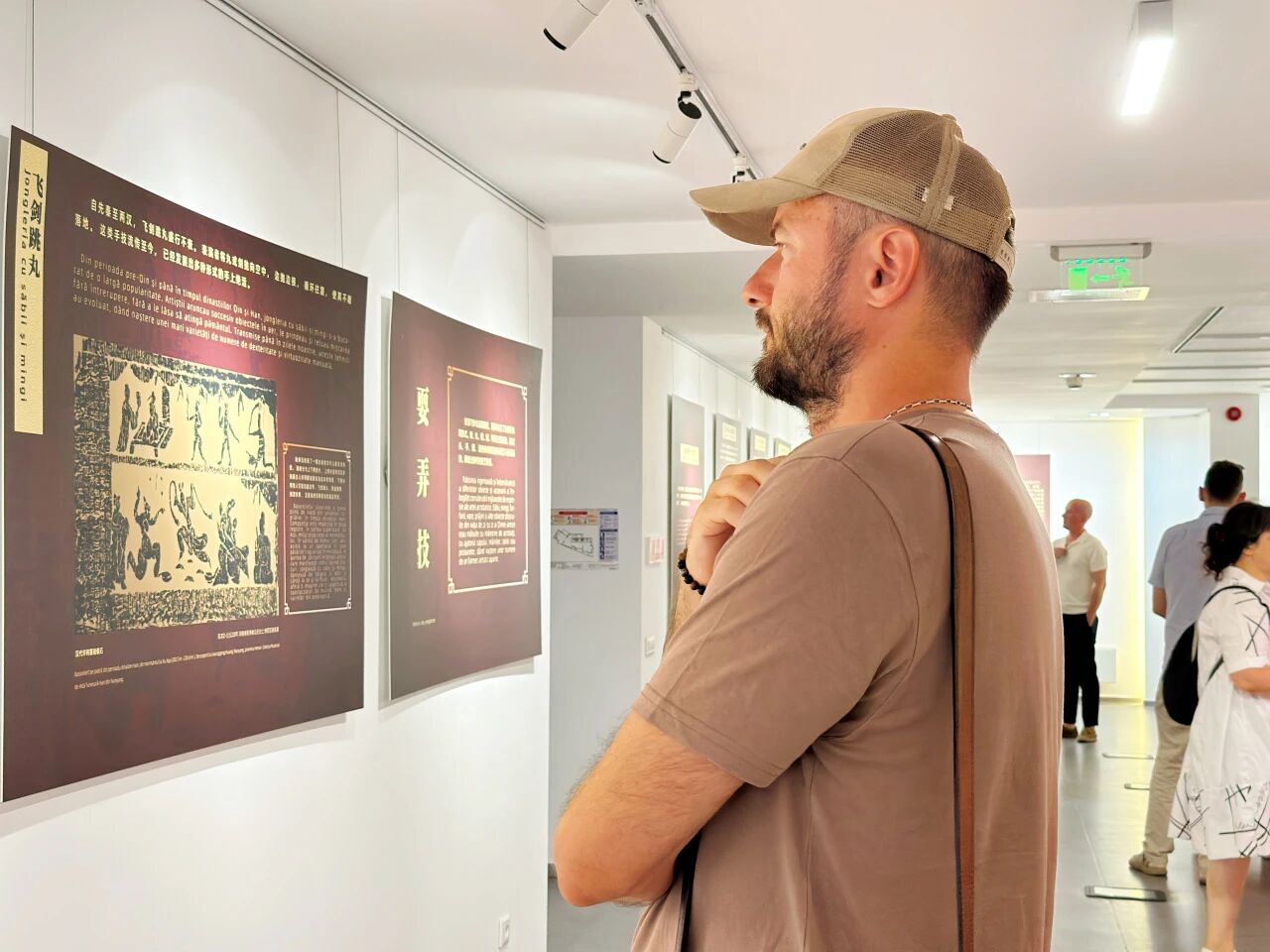
↑ Visitors viewing the exhibition