
On the evening of August 15, 12 faculty members from four universities in Hubei Province, including Wuhan Sports University, Wuhan Conservatory of Music, as well as representatives from the Hubei Provincial Peking Opera Theatre, departed from Wuhan by air for Hungary to participate in the “2026 Chinese Culture Great Paradise–Budapest Camp” event.
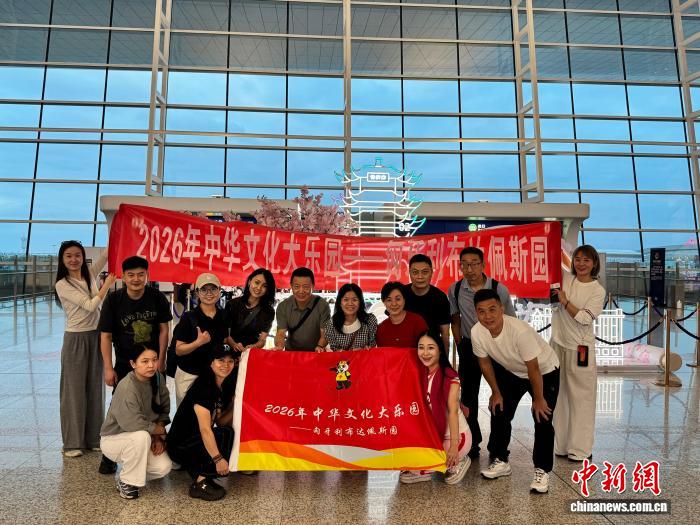
Members of the Hubei teaching team gather at Wuhan Tianhe International Airport before heading for Hungary for the 2026 Chinese Culture Great Paradise event. (Photo provided by the Overseas Chinese Affairs Office of Hubei Provincial People’s Government)
The 14-day event will offer cultural courses for overseas Chinese-origin teenagers in Hungary, covering ethnic folk dance, classical Chinese dance, martial arts, traditional Chinese folk music, folk songs, calligraphy, recitation of ancient Chinese poems, Peking Opera and traditional handicraft making and so on.
Wu Xueqin, a teacher from Wuhan Sports University, is scheduled to teach Tai Chi Fan courses. She said that Tai Chi Fan integrates the hard-and-soft martial techniques of Tai Chi with the flexible movements of opening, flipping and waving the fan. It is entertaining and highly watchable, helps cultivate one’s temperament and improve physical fitness, and with a low barrier to entry, allows teenagers of Chinese descent to pick it up quickly.
“Peking Opera integrates music, dance, literature and costumes, serving as an excellent vehicle for the teenagers to experience traditional Chinese culture in an all-round way,” said Zheng Xuelian, an actress of Hubei Provincial Peking Opera Theatre. She will guide teenagers to experience Peking Opera facial makeup, stage walk, as well as the core skills of singing, recitation, acting and acrobatics through representative excerpts such as The Monkey King Makes Havoc in Heaven, so they can appreciate the charm of the quintessence of Chinese culture.
Zhang Yunshan, a Chinese instrumental music teacher from Wuhan Conservatory of Music, will systematically teach music theory and performing techniques of traditional Chinese wind instruments such as the hulusi (Chinese gourd flute) and the suona (Chinese double-reed wind horn). He noted that traditional Chinese wind instruments embody the unique musical heritage of Chinese culture. He hopes that the teenagers can appreciate the distinctive charm of Chinese folk music while listening, playing and comprehending the melodies.
As is learned, the Chinese Culture Great Paradise is designed to meet overseas Chinese-origin teenagers’ demand for learning Chinese culture and deepen their understanding of it. Since 2014, Hubei Province has held six sessions of the Chinese Culture Great Paradise successively in Mauritius, Sydney of Australia, Montreal of Canada, Chile, Pekanbaru of Indonesia and Auckland of New Zealand.