
BUDAPEST/BEIJING, May 8 (Xinhua) -- Nestled near the glittering Danube River in the Hungarian capital of Budapest, a Hungarian-Chinese bilingual school has enjoyed rising popularity in recent years.
Saying "Nihao," hello in Chinese, is the first lesson for students. Many of them can fluently recite the Chinese version of poems by Hungarian poet Sandor Petofi. Teachers there also give lectures on Lu Xun, one of China's greatest modern writers in the 20th century.
Founded in 2004, the school has played a unique role in promoting cultural exchanges between China and Hungary over the past two decades. And in 2009, its bond with China grew stronger after a visit of a special guest.
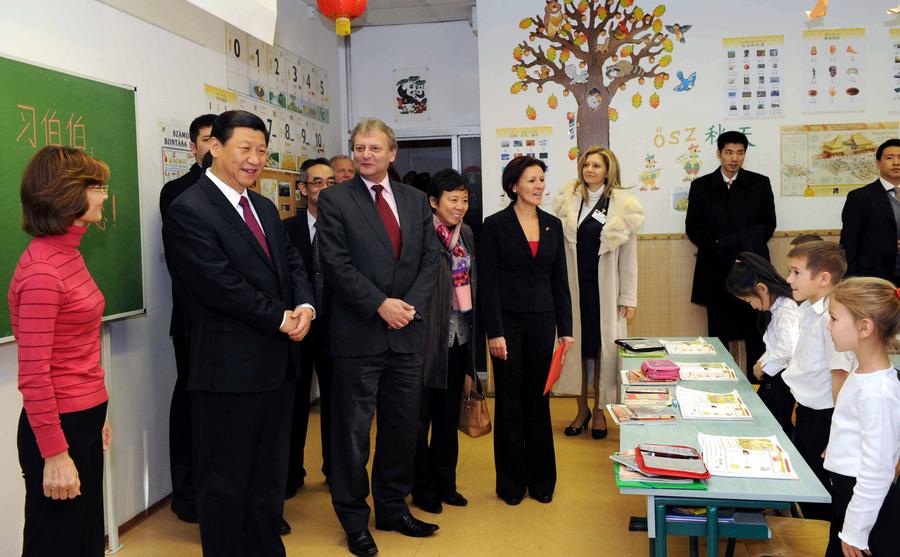
For Zsuzsanna Erdelyi, principal of the school, many heart-warming moments of the visit by Xi Jinping, who was Chinese vice president then, remain fresh in her memory.
During the tour of the school, he kept a smile on his face, and chatted with the children about poems and nursery rhymes, Erdelyi recalled.
To greet Xi, students wrote in Chinese characters on a blackboard "Hello, Uncle Xi." They also sang Mandarin songs, danced ballet and put on martial arts performances.
Xi was particularly impressed when two students recited "Quiet Night Thoughts" and "Love Seeds," two classic poems from China's Tang Dynasty more than 1,000 years ago.
Applauding the children's performance, Xi shared with them his appreciation of the Hungarian culture and the long-running bilateral cultural exchanges. He took himself as an example, saying that quite many Chinese of his age watched "Ludas Matyi," a 1950 Hungarian movie based on an eponymous poem.
Noting that some Chinese literature classics like "A Dream in Red Mansions" were translated into Hungarian long ago, Xi said that many Chinese were also fond of the Hungarian Rhapsodies, a collection of 19 piano pieces by Hungarian composer Franz Liszt, who is considered the greatest piano virtuoso of his time.
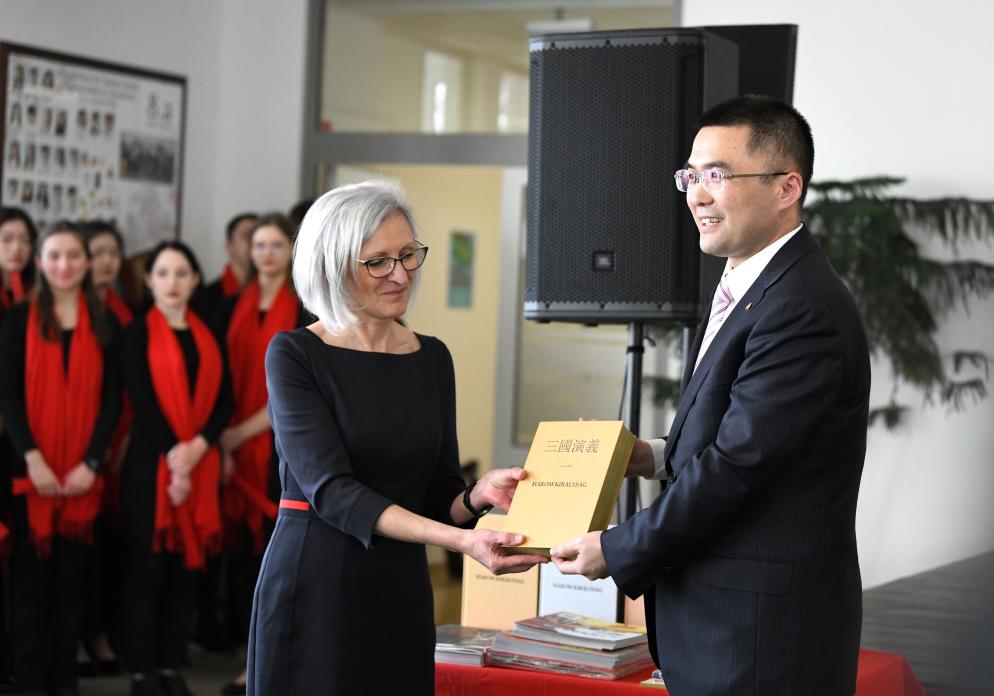
Xi gave textbooks and teaching equipment as gifts to the school. The students also returned a present to him: a piece of drawing of a little red heart with some handwritten warm wishes.
Over the years, the Chinese leader has followed the school's development, said Erdelyi. "He gave a lot of valuable advice for the school, including the famous Chinese proverb: 'It takes 10 years to grow trees, but 100 years to cultivate people.'"
"Teaching children is a similar process ... It's only when they turn into adults after many years of schooling that we truly appreciate the impact of school education on their lives," she added.