
“Hi everyone, this is Henry.” Open Wang Henry’s short-video account, and nearly every video opens with this warm greeting. Following his camera, netizens take virtual tours of Krujë Castle in Albania and the Great Wall in China. They get to know traditional dishes on Albanian dinner tables, and check out signature Beijing snacks such as Tanghulu (candied hawthorns on a stick) and Baodu (blanched tripe).
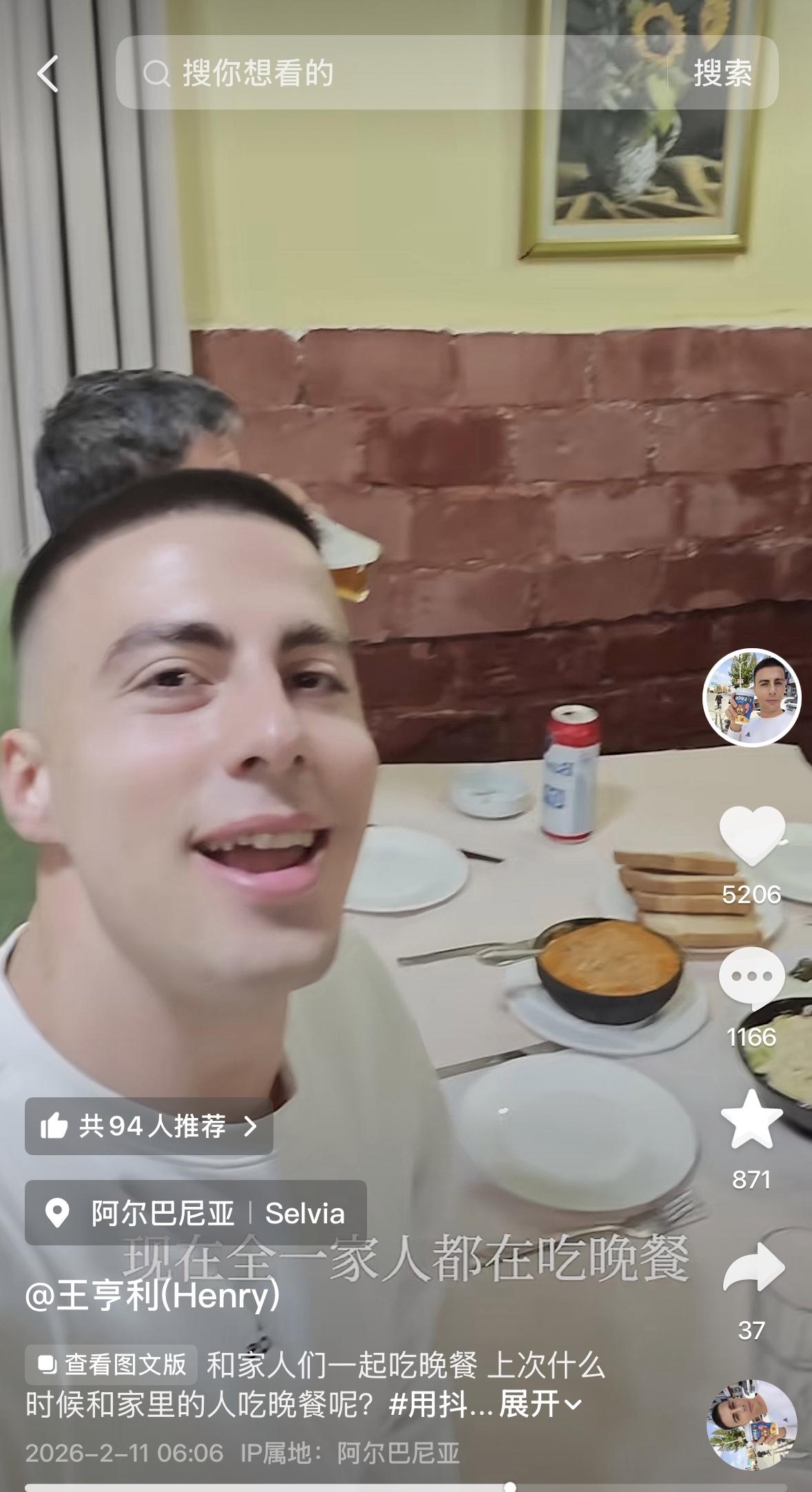
Wang Henry introduces Albanian dishes via short-form videos. (Screenshot from video)
More Than 300 Short-form Videos Depicting Customs of Two Countries
The bond between Wang Henry and Chinese language began at the Confucius Institute at the University of Tirana, where he systematically studied Chinese for three years. Impressed by the outstanding strength of the Tourism Management major at Beijing International Studies University, he came to China in 2023. After one-year pre-university study, he officially started his undergraduate studies in this university.
After enrolling, Wang Henry often pondered what he, as a tourism-major student, could do to boost tourism and cultural exchanges between the two countries. Short-form videos came to his mind. “Now short-form video is the most accessible medium for me to share my life and voice my opinions.”
Browsing various short-video platforms, he found little long-term, objective content by young Albanians, showing real-life scenarios of both countries in Chinese-language cyberspace. This lack led him to present local cultures and lifestyles of the two nations through videos.
In early 2024, Wang Henry officially embarked on short-video creation. He independently handled the whole workflow: drafting scripts, shooting on-site, writing subtitles and post-production editing. Up to now, he has released more than 300 short-form videos. Some focus on Albania: traditional home-cooked food on his family’s dinner table, the millennium-old Krujë Castle, and laid-back small-town life along the Mediterranean coast; Other footage captures his life in Beijing: taking part in cultural festivals on the BISU campus, cycling in city parks, and visiting the Great Wall during Chinese New Year.
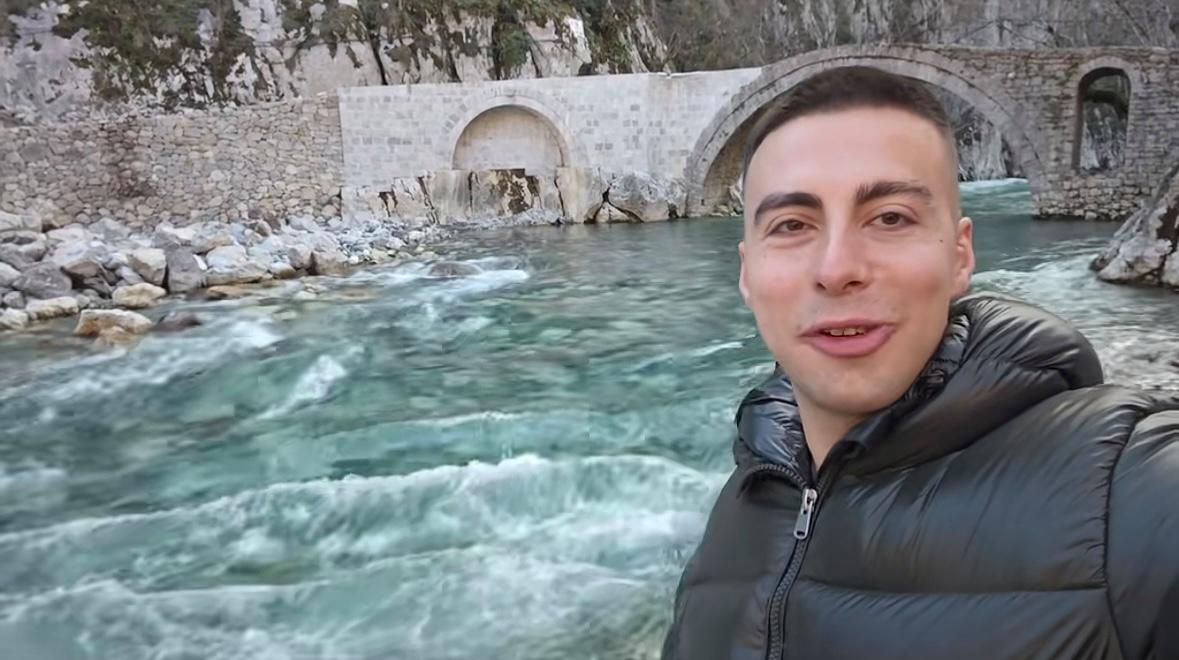
Wang Henry films and releases short-form videos introducing local customs of Albania. (Screenshot from video)
At the initial stage, he encountered low view counts and lacked shooting inspiration, yet he kept updating his channel. For him, video-making has become part of his overseas student life. Every morning, he jots down his shooting ideas in a notebook. He leverages AI tools to polish scripts, review performance data of past videos, identify weaknesses in shooting and narration, and gradually develops content styles that resonate with audiences from both countries.
He has also received pleasant surprises. A mere 20-second clip about local home-cooked food unexpectedly went viral, racking up over 100,000 views, with many netizens sending best wishes to his family. Another video narrating the history of Krujë Castle entirely in Chinese gained 200,000 views on overseas social platforms.
Many believe cross-cultural content creation is highly challenging, but Wang Henry holds a different view. From his perspective, short-form videos follow similar underlying logic to attract viewers: authentic, life-oriented content tends to strike a chord with audiences.
Travelling across 15 Chinese Cities: Understanding Cultural Similarities and Differences between two nations
Over two years, taking advantage of holidays and university field trips, he has travelled to 15 cities across China, including Guangzhou, Hefei, Zhangjiakou, Zhangjiajie, Shanghai and Chengdu. Travelling from city to city, he has compared daily life in Albania, noting the similarities and differences in how people dress, eat, live, travel, and relate to one another.
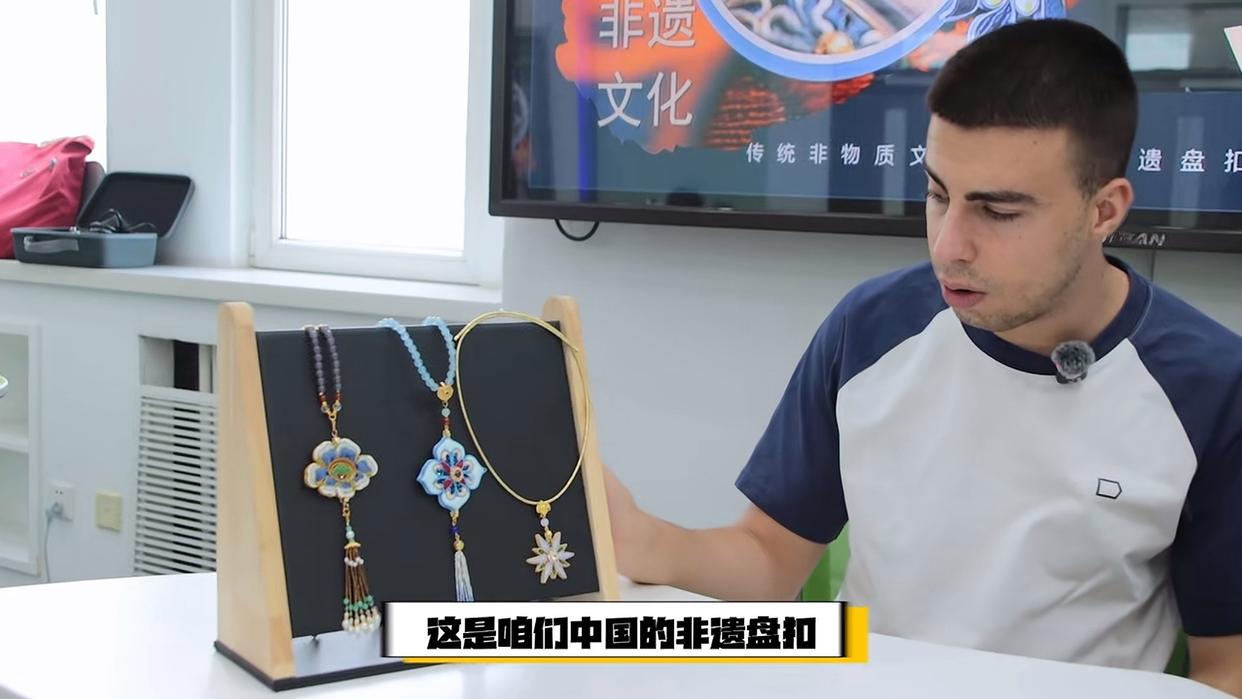
Wang Henry learns China’s intangible cultural heritage and produces short-form videos for release. (Screenshot from video)
China’s sophisticated digital life services stand out as a major difference. According to Henry, online discounts and offline group-buying services are widely available across China, bringing great convenience to people’s daily lives. “Albania does not have similar platforms. You can hardly find any deals for dining or shopping.”
Despite these differences, people in both nations share an in-born spirit of warmth and hospitality. After class, he has been invited many times to Chinese classmates’ homes. “When visiting a Chinese household, hosts will prepare a feast for guests and give gifts when you leave. The same holds true in Albania — we lay out all the best food we have for guests,” Henry says with a smile. Such simple kindness serves as a soft connecting thread linking the two cultures.
Building a Bridge for China-Albania by Cultural-tourism Communication
From Wang Henry’s observation, many elder Albanians around him speak fluent Chinese. Back in the 1950s-1960s, China-Albania exchanges thrived, and quite a number of young Albanians pursued higher education in Chinese universities. Nowadays, however, few post-2000s Albanians speak Chinese and study in China like him.
Changes are unfolding little by little. Decades ago, some Albanians held stereotypes about Made-in-China products. Today, as Chinese-brand smartphones and new-energy vehicles become more widely available locally, firsthand user experience has reshaped local perceptions of China’s industrial development. “Now people recognize the quality of Chinese products, and are curious about China’s fast-advancing technology and urban development.”
Every summer holiday when he returns home, he shares his study and life in Beijing with family and friends. After hearing his stories and watching his videos, many peers have developed an interest in travelling to or studying in China.
“I want to be Henry who refuses to be boxed in.” Talking about his post-graduation plans, he has mapped out two paths: pursuing further postgraduate studies in China, or engaging in China-Albania cultural-tourism exchanges. “I hope to build a communication bridge between the Chinese and Albanian people, and contribute to cultural-tourism interactions and people-to-people ties between our two countries. That is a heartfelt aspiration of mine,” Wang Henry remarks.