
At the invitation of Justus Liebig University Giessen in Germany, the ZEISS Research Microscopy Solutions laboratory at Carl Zeiss Microscopy GmbH, and the Jožef Stefan Institute in Slovenia, a seven-member delegation of faculty and students from Wuhan Textile University's School of Microelectronics made an 11-day academic visit to Germany and Slovenia from Aug 17 to 27. The delegation first attended the fifth Sino-German Bilateral Workshop on VO2-Based Energy-Saving Coatings and Related Energy Materials and Nanotechnology, held from Aug 17 to 21. Funded by the Sino-German Center for Research Promotion, the workshop was hosted by Justus Liebig University Giessen, with Wuhan Textile University involved in its organization. It aimed to provide a platform for exchanges and cooperation among Chinese and German experts and scholars and to advance energy materials, nanotechnology and smart devices.
During the workshop, faculty and doctoral students from the School of Microelectronics held in-depth discussions with German scholars on frontier topics including VO2-based energy-saving coatings, wide-bandgap semiconductor materials and devices, and nanotechnology. In an invited presentation, Professor He Yunbin gave a systematic account of his team's progress in ultrawide-bandgap semiconductor materials and devices. Professor Wang Shengxiang shared his research on chiral metasurfaces and their applications in information transmission in another invited presentation. Dr Chen Jian, Dr Qin Mi and other participants also presented their research findings. The school's faculty and students took an active part in academic discussions with German participants, examining key experimental techniques, major findings and theoretical interpretations in detail, and gaining valuable international perspectives and constructive guidance.
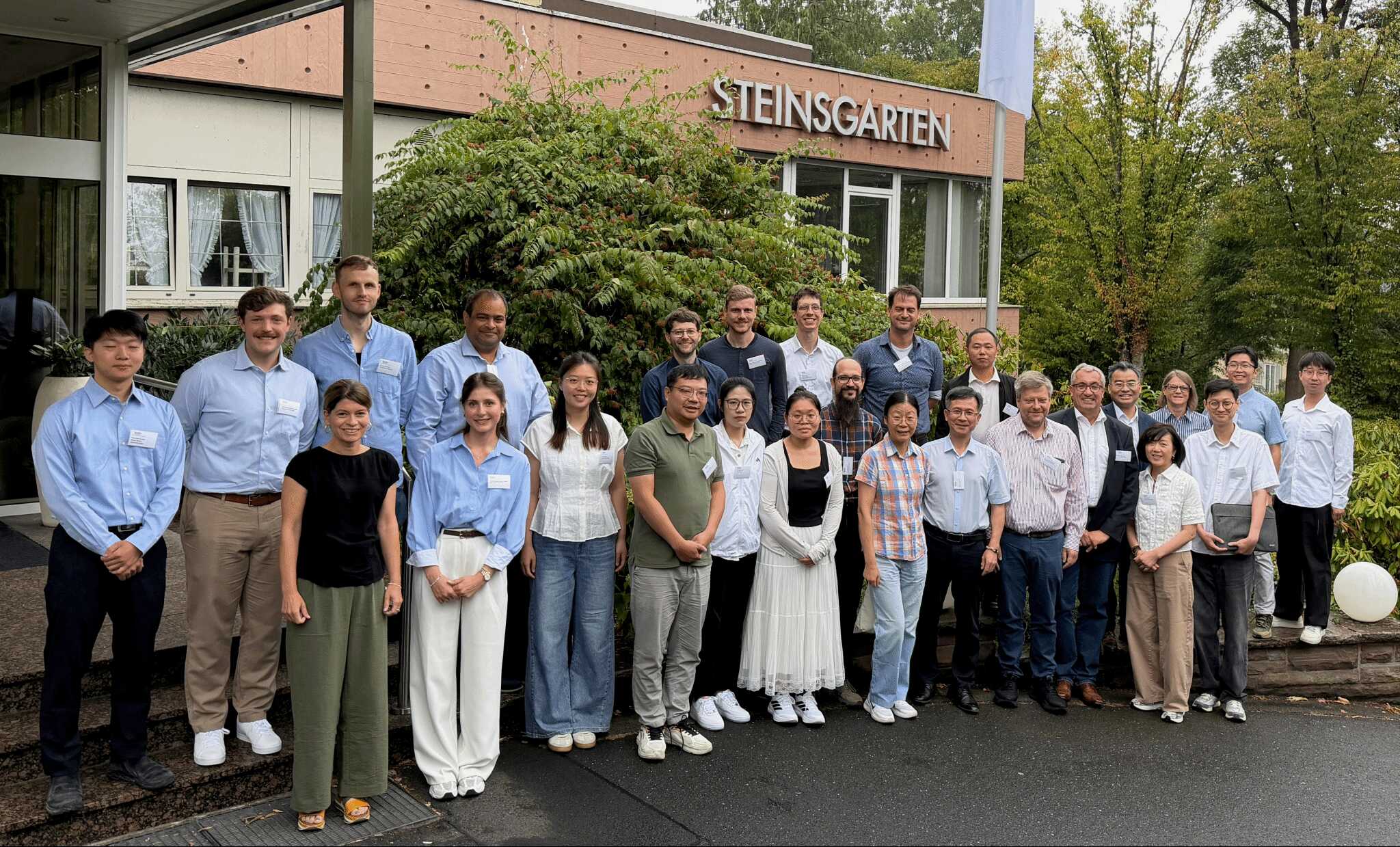
Workshop participants pose for a group photo.
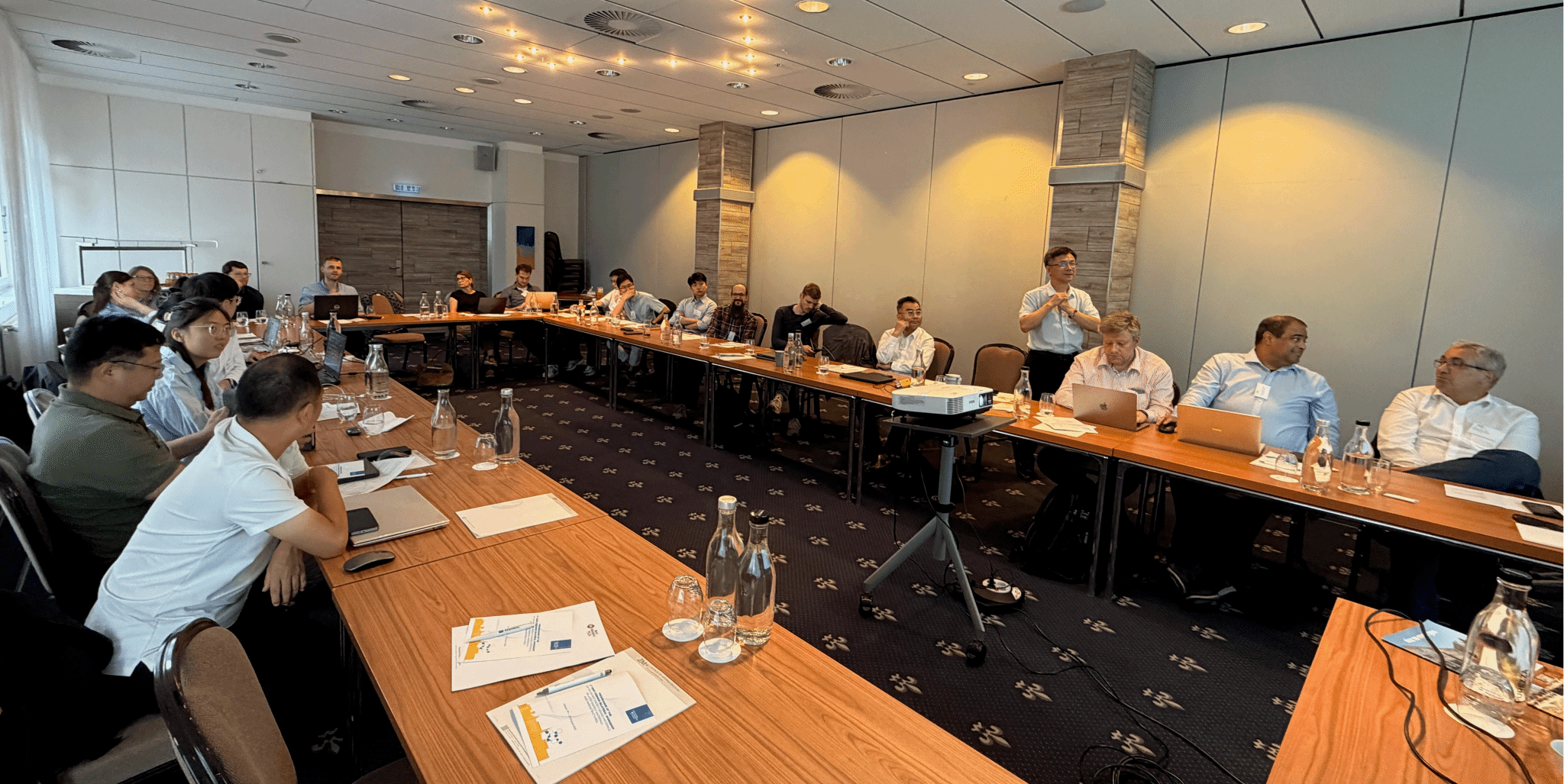
Participants engage in academic discussions.
After the workshop, the School of Microelectronics team held in-depth discussions with Professor Peter J. Klar's team at Justus Liebig University Giessen on their joint Sino-German project, "Rational Optimization of Thermochromic Vanadium Dioxide Thin Films as Active Materials for Sustainable Smart Windows". The two sides reached agreement on several matters concerning interim results and future research plans. Professor He also shared the school's progress in ultrawide-bandgap Ga2O3-based materials and devices, as well as wide-bandgap semiconductors such as tin oxide and germanium oxide. The teams discussed joint applications for international research projects, joint postgraduate training and reciprocal visits by early-career researchers.
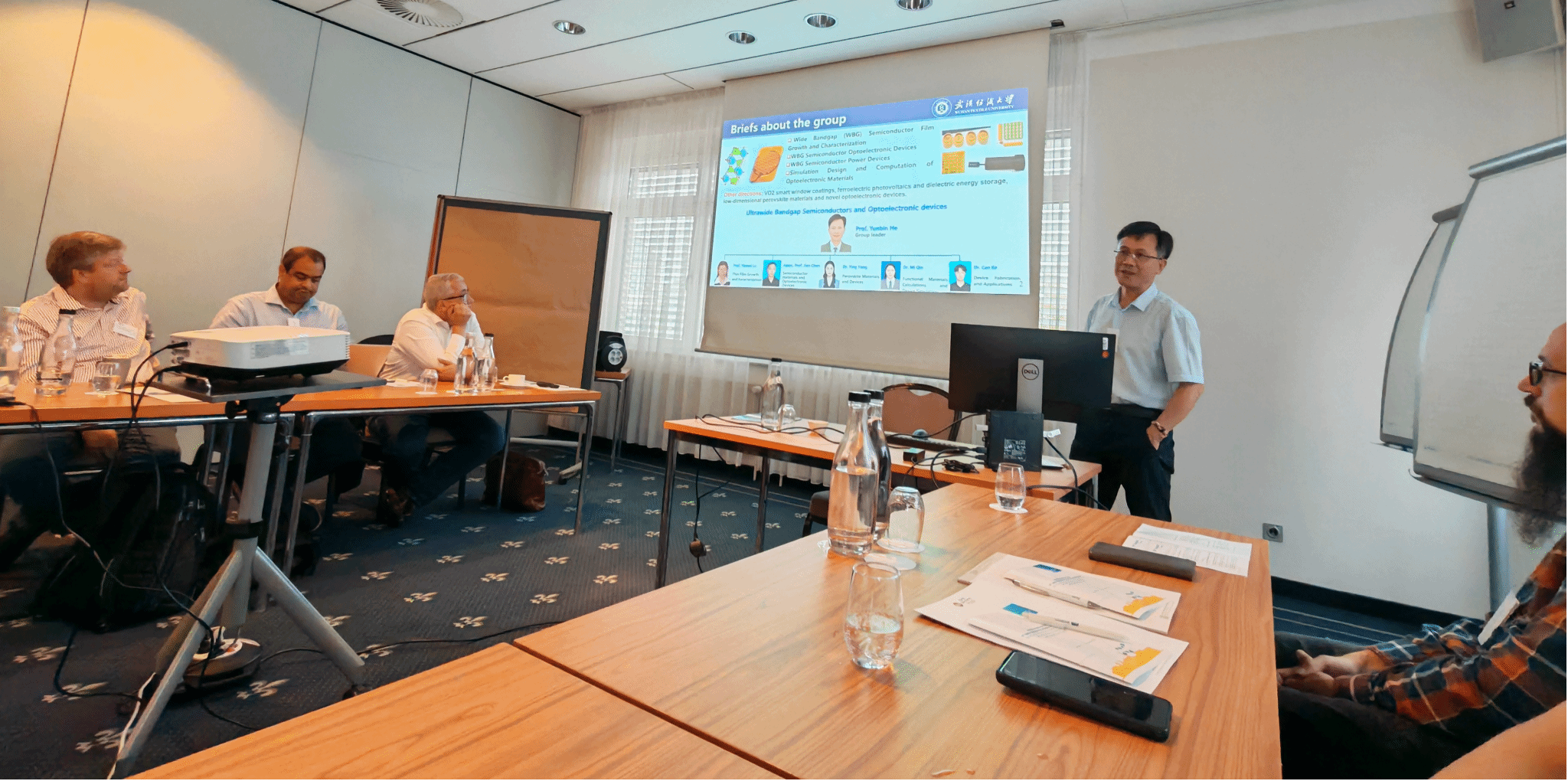
Professor He Yunbin delivers an invited presentation.
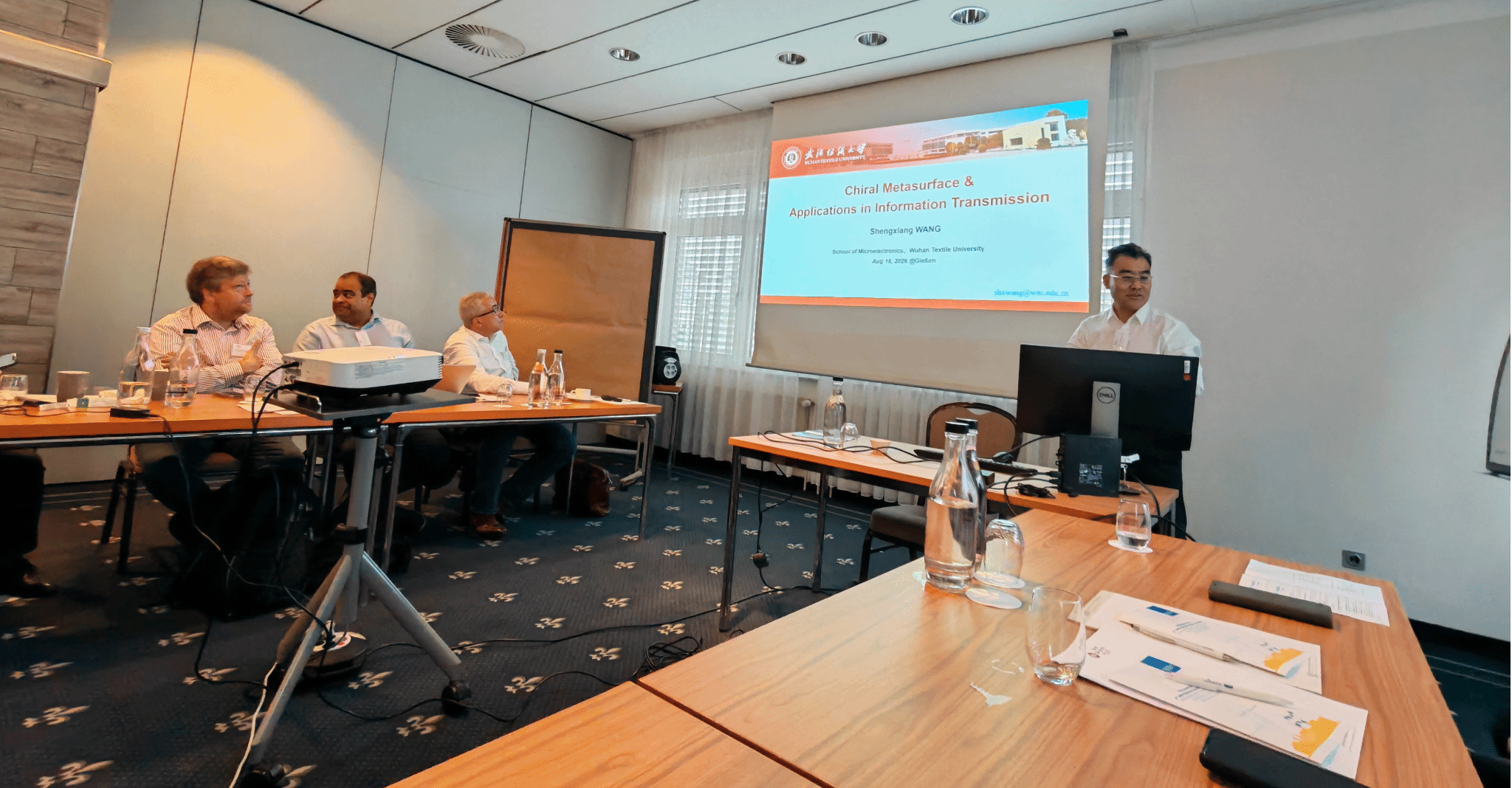
Professor Wang Shengxiang delivers an invited presentation.
In Munich, the delegation visited the ZEISS Research Microscopy Solutions laboratory at Carl Zeiss Microscopy GmbH. They studied the operating principles and history of electron microscopy and cutting-edge techniques in advanced electron microscopy. Professors He and Wang introduced the School of Microelectronics and their teams' research progress in ultrawide-bandgap semiconductor materials and devices, and smart materials and devices. The two sides explored cooperation on detailed microstructural characterization services for semiconductor materials and joint technology development.
In Ljubljana, Slovenia, the delegation visited the Jožef Stefan Institute and met research teams from its Department of Surface Engineering. Professor Janez Kovač first introduced the institute and its principal research areas. Professor He then outlined Wuhan Textile University, the School of Microelectronics, its research teams and their areas of study. After the meeting, the delegation toured the teams' laboratories. The Chinese and Slovenian sides held in-depth discussions on future cooperation in novel ultrawide-bandgap materials and devices. As an important outcome of the visit, Professor He signed a five-year science and technology cooperation agreement with the Department of Surface Engineering on behalf of Wuhan Textile University's School of Microelectronics. Under the agreement, the two sides will cooperate on research, faculty and student exchanges, and joint applications for international cooperation projects under BRICS and the Belt and Road Initiative.
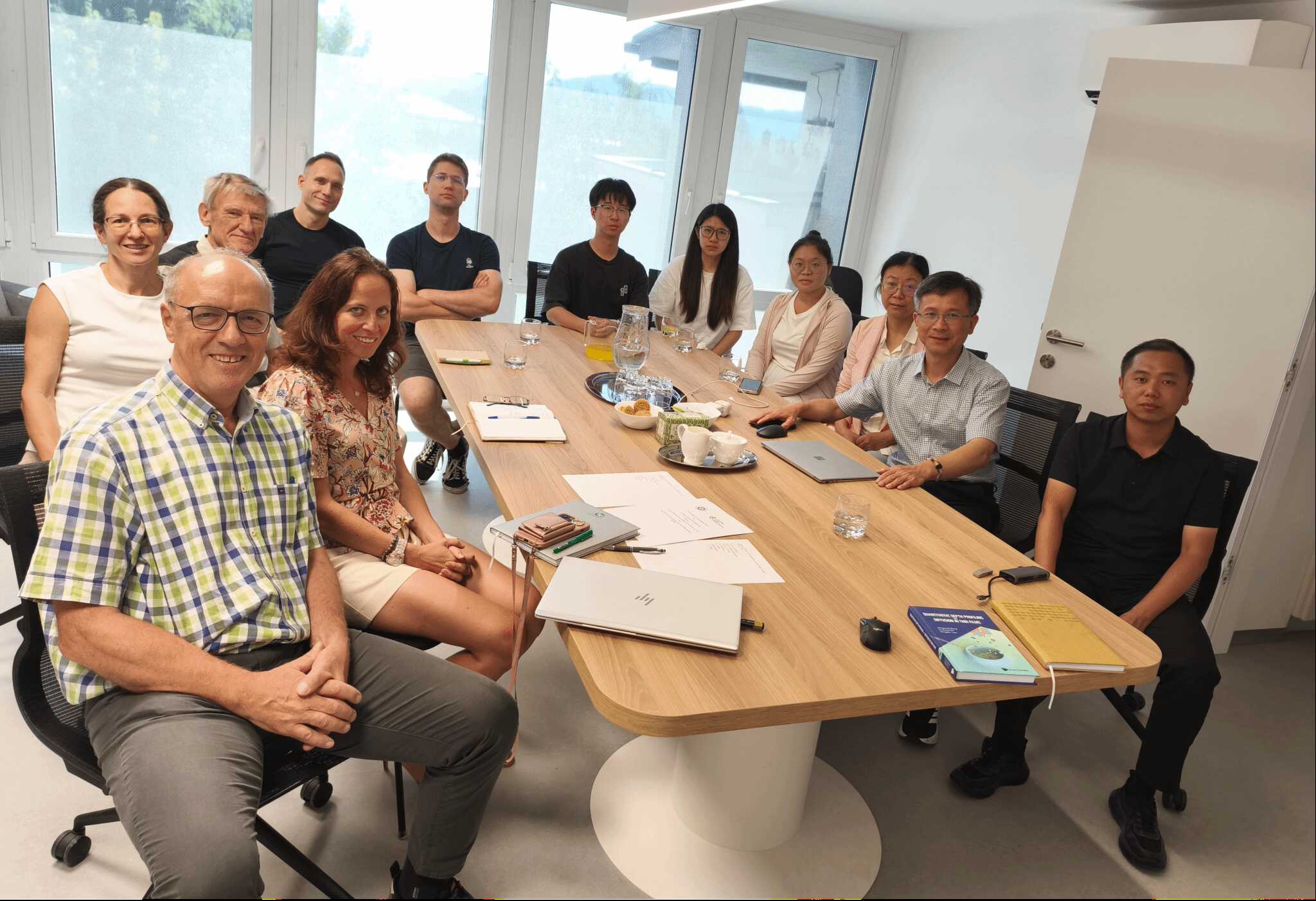
The School of Microelectronics delegation poses for a group photo with members of the Department of Surface Engineering at the Jožef Stefan Institute.
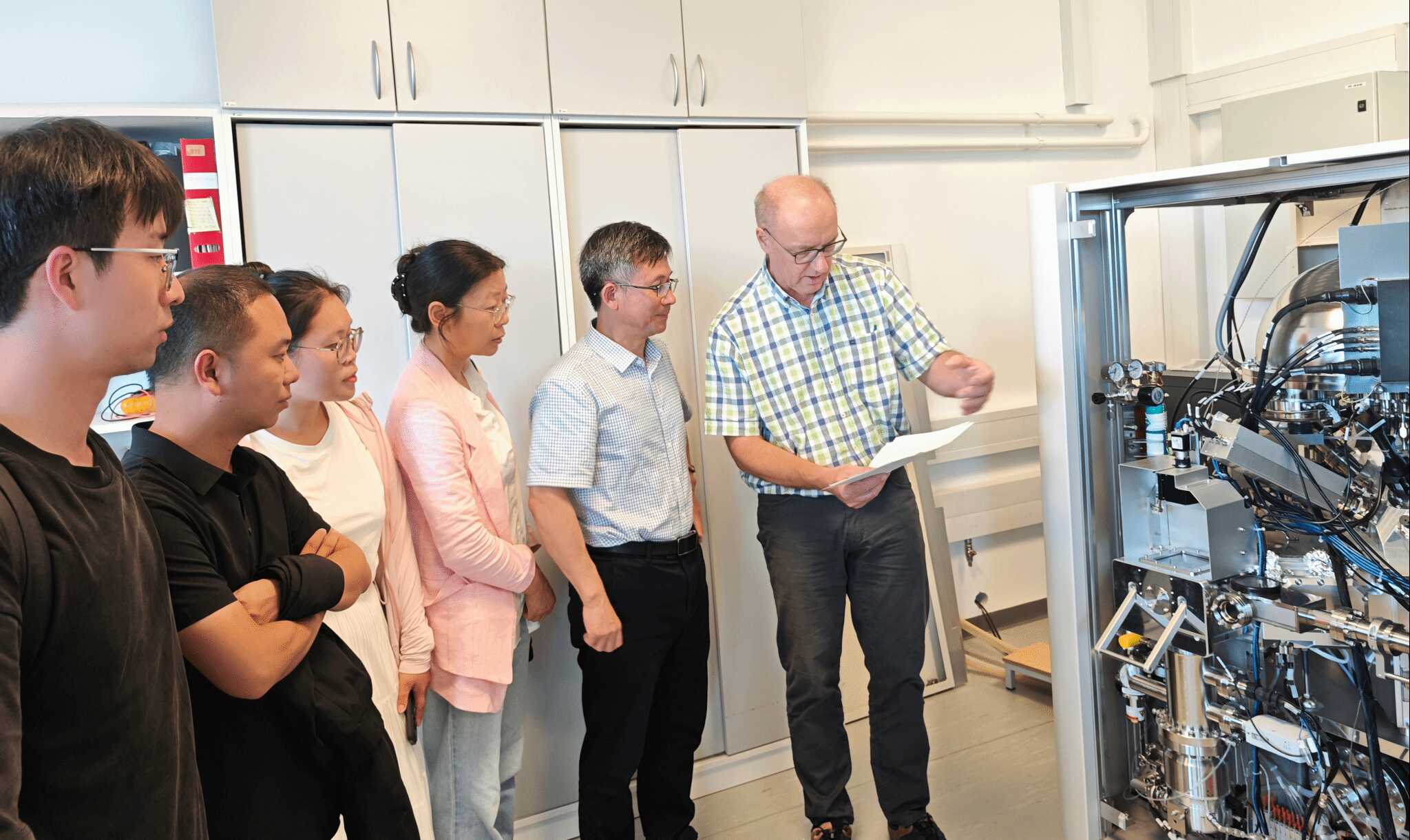
The delegation tours Professor Kovač's laboratory.
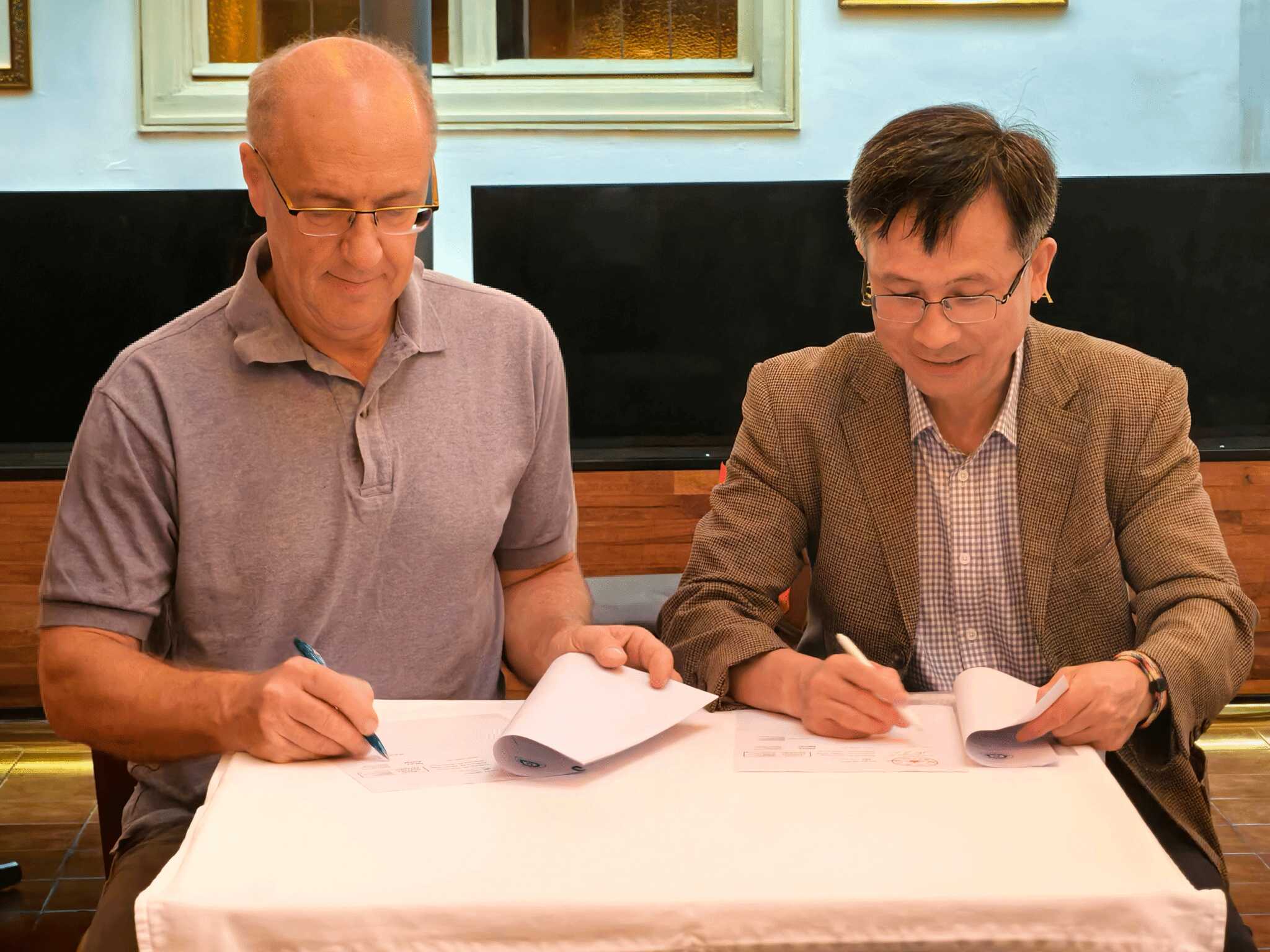
Professor He Yunbin and Professor Kovač sign a science and technology cooperation agreement on behalf of their respective institutions.
The visit expanded Wuhan Textile University's network of partnerships with leading research institutions in Germany and Slovenia and raised its international visibility and academic influence in wide-bandgap semiconductor materials and devices. The School of Microelectronics will review the outcomes promptly and advance substantive cooperation with Justus Liebig University Giessen, the Jožef Stefan Institute and other institutions, providing strong support for the university's international research platforms and applications for international cooperation projects.